City Train Game 3d Train games
Monster Games Productions PTY LTDStrategy
4.293.00 Reviews
- Version
- 3.5.0
- Installs
- 10.00M
- Age Rating
- Everyone
Screenshots
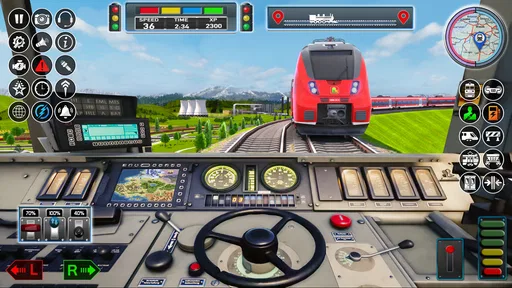
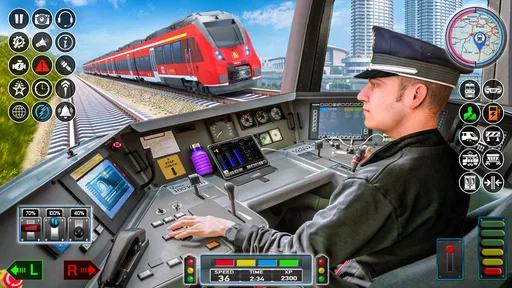
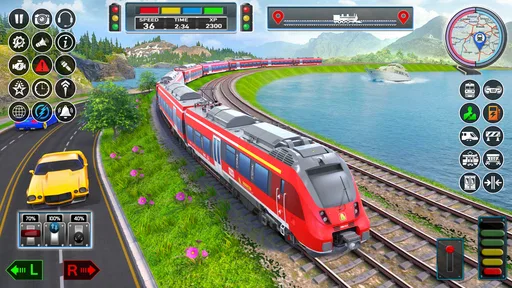
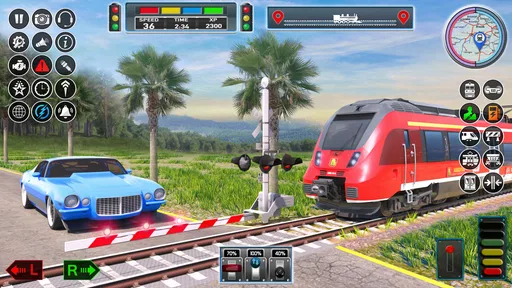
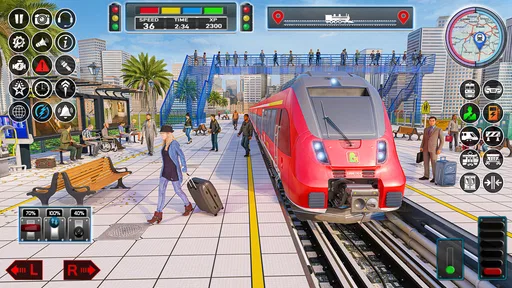
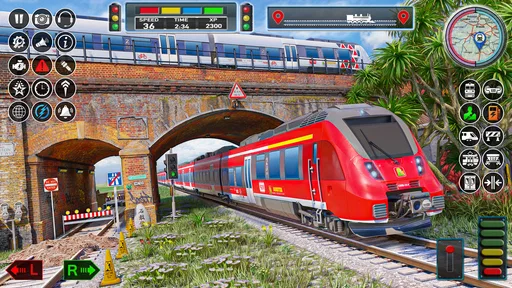
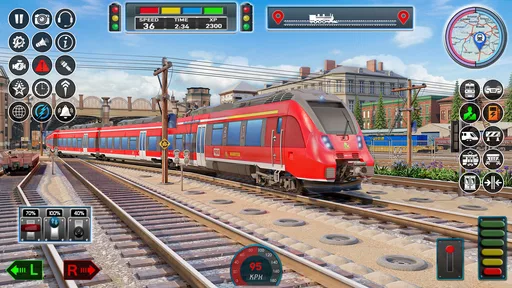
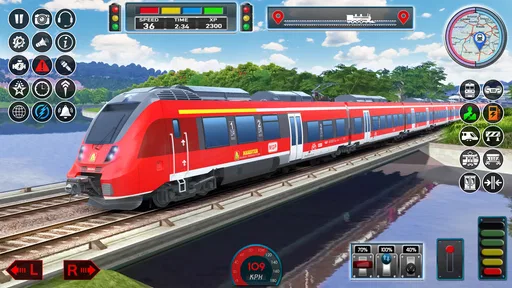
Our Review of City Train Game 3d Train games
 Analysis by Appyee
I approached City Train Game 3d Train games expecting a straightforward strategy game about keeping a city railway moving, and that is exactly where its appeal lies. It does not try to bury the first-time player under a complicated introduction. Instead, the central idea is easy to understand: manage train journeys, pay attention to stations, and avoid leaving passengers waiting longer than necessary. For anyone who enjoys transport-themed games but prefers a lighter starting point than a full railway simulator, this is an approachable place to begin.
After spending time with it, I see the game as a casual strategy experience rather than a realistic recreation of railway operations. The satisfaction comes from making sensible decisions quickly and learning how to keep the flow under control. It is free to install, suitable for Everyone, and developed by Monster Games Productions PTY LTD. Its average rating is 4.2 from around 38 thousand ratings, while the game has passed 10 million installs, so it has clearly found a large audience among players who enjoy simple city and train challenges.
What to expect when you start playing
The most important thing to understand before installing is the scale of the experience. This is not the kind of railway game I would choose when I want detailed timetables, realistic signaling, extensive route construction, or a deep economic simulation. Its focus is much more immediate: watch what is happening around stations, make choices that keep trains useful, and respond before a small delay becomes a larger problem.
That simplicity makes the first few sessions comfortable. I could pick it up for a short break without needing to remember a long list of controls. The city-train theme gives the game a clear identity, while the strategy category comes from deciding what deserves attention first. A player who enjoys organizing movement, reacting to changing priorities, and improving through repetition will probably understand the attraction quickly.
The game is also a better fit for people who like visible progress during a session than for players who need a large story or a highly detailed world. The pleasure is in the process of getting a busy station under control. When several passengers are waiting, the useful question is not simply “What can I do?” but “Which action will reduce the pressure most effectively?” That small change in thinking gives the game more strategy than its short description might suggest.
There is a practical advantage to its approachable design. I can imagine using it during a commute, while waiting for an appointment, or at home when I want something more active than a puzzle but less demanding than a long role-playing game. The sessions encourage concentration, yet the premise remains familiar enough that I do not need a separate explanation every time I return.
Players should still arrive with realistic expectations. The free entry point is convenient, but in-app purchases range from $1.49 to $9.49 per item. That does not automatically make the game unsuitable, although it is worth remembering if you are choosing something for a child or trying to keep mobile spending tightly controlled. The Everyone age rating makes the game broadly accessible, but adults may still want to review purchase settings before handing over a device.
Why the city setting matters
The city environment is more than decoration because it gives the player a reason to think about timing and passenger movement. A train is useful only when it helps the people waiting at the right place. That relationship between vehicles and stations is what turns the subject into a strategy game instead of a simple driving activity.
I also like that the theme makes mistakes easy to understand. If I focus on a train that is already doing well while ignoring a crowded station, the consequences feel logical. The game rewards awareness rather than random tapping. For a first-time player, that is helpful because the route toward improvement is visible: look farther ahead, notice where pressure is building, and avoid treating every problem as equally urgent.
Compared with many management games, this one feels less concerned with long-term construction and more concerned with the next useful decision. Compared with arcade train games, it asks for more planning and observation. That middle ground is its strongest position. It will not replace a complex transport simulator, but it may be more inviting for someone who finds those games intimidating.
From installation to the first meaningful success
The current version is 3.5.0, and the minimum operating-system requirement is Android 6.0. Once installed on a compatible device, I recommend treating the opening session as a learning exercise rather than trying to play perfectly. The first goal should be to understand what the stations are asking for, how trains relate to those demands, and which actions produce an immediate improvement.
One mistake new players often make in this type of game is tapping as soon as something appears on screen. I found it more useful to pause mentally for a moment and scan the whole situation. Look at the waiting passengers, identify which station seems most urgent, and then decide whether moving a train now will solve that problem or simply create another one elsewhere. This habit is more valuable than memorizing a particular sequence of taps.
For a reassuring first attempt, choose one clear objective: reduce the pressure at a busy station. Do not try to optimize the entire city immediately. Send your attention to the place that is visibly struggling, observe the result, and then check the surrounding stations again. That loop—observe, act, reassess—is the basic rhythm I would teach to a friend installing the game for the first time.
The first meaningful success is not necessarily a spectacular score. It is the moment when you stop reacting blindly and begin anticipating what the network needs next. If a train has just helped one station, ask where its next useful contribution could be. If another station is quiet, avoid wasting attention there simply because it is easier to manage. This is where the strategy becomes personal: different players will notice different patterns and develop their own priorities.
A practical first-session routine
Spend the opening moments identifying the stations that need attention rather than immediately selecting the nearest train.
Choose the action that appears most likely to relieve the greatest waiting pressure.
After every important move, scan the rest of the city instead of staring at the same station.
When the situation improves, notice why it improved. That observation will help you make the next decision faster.
This routine sounds simple, but it prevents a common early problem: becoming so focused on one train that the rest of the network is forgotten. The game becomes less stressful when I treat the screen as one connected system rather than a collection of isolated tasks.
Another useful tip is to avoid judging the game after only a few taps. The early interface may feel obvious, yet the strategic layer becomes clearer when several demands compete for attention. Give yourself enough time to see how one decision affects the next. If you prefer games that reveal their depth instantly, the opening may seem modest; if you enjoy learning through repeated short sessions, that gradual understanding works in its favor.
Common confusion for new players
The first point of confusion is usually the difference between controlling a train and managing a service. A train may be moving correctly, but that does not mean the overall situation is healthy. I had to keep reminding myself that the important question is whether passengers are being served efficiently, not whether a vehicle is simply active.
Another source of friction is deciding what to ignore temporarily. In a busy city, not every station can receive equal attention at the same moment. New players may try to fix every visible issue immediately, but that can lead to hurried decisions. I found better results by accepting that a minor delay can wait if another station is close to becoming the main problem.
It is also easy to assume that the nearest option is automatically the best one. In a strategy game, convenience and usefulness are not always the same. Before committing to a move, consider whether it will genuinely reduce waiting or merely shift the problem. This is one of the game’s less obvious lessons, and it is why I would not describe the experience as mindless tapping.
Players coming from conventional train-driving games may also need to adjust their expectations. The goal is not simply to enjoy the sensation of operating a vehicle. The city and its passengers create competing priorities, so the player’s attention belongs to the wider flow. If you want a relaxing ride with little pressure, another train-themed game may suit you better. If you want to think about service and timing, this one is more appropriate.
There is a separate practical question about purchases. Since the game is free, I would start without spending anything and first decide whether the basic rhythm is enjoyable. The available purchase range makes it possible to spend modestly or more substantially per item, but spending should not be treated as a substitute for learning the network. My recommendation is to understand the core decisions first, especially if the game is being played on a shared family device.
How to improve after the first success
Once I understood the basic loop, I started paying attention to efficiency rather than merely survival. That means looking for decisions that solve two problems in sequence instead of one isolated issue. A train that helps a crowded station and then remains useful for the next demand is more valuable than a move that produces a brief improvement but leaves the network awkwardly balanced.
This is a concrete trade-off that generic descriptions rarely explain: immediate relief is not always the same as good planning. Sometimes the best action is the one that prevents a future bottleneck, even if another station currently looks slightly busier. Learning to recognize that distinction gives the game its strongest strategic quality.
I would also recommend developing a scanning habit. Every time you make a meaningful decision, move your attention away from the original problem and inspect the wider layout. This reduces tunnel vision and helps reveal changes before they become urgent. It is especially useful during short sessions because it turns each action into a small information-gathering step, not just a move.
A third insight is that patience can be an active strategy. Waiting briefly to understand the developing situation may feel less productive than tapping immediately, but it can prevent a chain of poor choices. In this game, the player who notices patterns often performs better than the player who acts fastest without a plan. That makes it suitable for people who enjoy measured decision-making more than pure reflexes.
Who will enjoy it and who should choose something else
I would recommend this game to a first-time strategy player who likes trains, city management themes, and short decision-focused sessions. It is also a good option for someone who wants a clear objective without committing to a large campaign or a complicated simulation. The Everyone rating broadens its audience, while the familiar passenger-and-station premise makes it easy to explain to younger players and casual players alike.
It can work particularly well in an everyday scenario such as a ten-minute wait before an appointment. I would open it, spend a few moments reading the station situation, play until I had restored a smoother flow, and then stop without feeling that I had abandoned a long narrative. That kind of flexible session structure is one of its practical strengths.
I would be more cautious about recommending it to someone who wants advanced railway realism. If your ideal game includes detailed route building, signaling systems, extensive customization, or a deep financial model, this experience may feel too focused on immediate passenger management. A dedicated simulator or larger transport-management title would offer more depth in those areas.
It may also disappoint players who dislike repetition. The core pleasure comes from refining decisions across similar situations, so the game’s appeal depends on enjoying that process. If you need constant new mechanics, a strong story, or a large number of unrelated activities, the focused design could feel narrow after the novelty of the train setting wears off.
Compared with the usual alternatives in the strategy category, its advantage is accessibility. It asks less preparation than a complex management game and more attention than a purely casual arcade title. The trade-off is that the same focused design limits the range of things to do. I see that as a fair exchange for a player who wants a compact city-train challenge, but not for someone looking for a complete railway hobby in mobile form.
My recommendation after using it
My advice is to begin with the free experience, keep the first session deliberately simple, and judge the game by how much you enjoy improving your decisions rather than by how quickly you progress. Watch the stations, think in terms of passenger pressure, and resist the urge to solve every issue at once. Those habits make the game feel more strategic and less chaotic.
Monster Games Productions PTY LTD has created a game with a clear, approachable identity. It is not trying to be every kind of train game at once, and that focus helps it work. The city setting gives the player understandable priorities, while the short-session format makes it easy to return to when you have a little spare time.
For me, the strongest reason to try City Train Game 3d Train games is the way it turns a familiar subject into a manageable exercise in prioritization. I can recommend it to casual strategy fans, train enthusiasts who want something lighter, and newcomers who need a gentle route into management games. I would skip it only if you require simulation-level detail or dislike repeating a focused gameplay loop.
Overall, I found it most enjoyable when I played thoughtfully rather than hurriedly. Start by helping the station that needs you most, check how that decision changes the wider city, and build from there. If that simple cycle sounds satisfying, this free strategy game is worth trying; if you want a fully detailed railway simulator, it is better viewed as a friendly introduction than a final destination.
Verdict
Strengths of City Train Game 3d Train games
- Simple controls make it easy for beginners to start playing.,3D train environments provide a more immersive driving experience.
- Short missions are convenient for quick gaming sessions.
- Train customization adds variety beyond basic driving.
- Offline play lets you enjoy the game without an internet connection.
Limitations of City Train Game 3d Train games
- Repetitive missions may reduce long-term enjoyment.
- Some levels can feel too easy for experienced players.
- Advertising may interrupt gameplay between missions.
- Graphics quality can vary across different mobile devices.
- Limited train and route options may affect replay value.
Similar Picks in This Category
View All
Clash of Clans
Supercell4.5

Plants vs. Zombies™
ELECTRONIC ARTS3.7

Lords Mobile: Kingdom Wars
IGG.COM4.5

Clash Royale
Supercell4.4

State.io — Conquer the World
CASUAL AZUR GAMES4.1

Car Driving School : Car Games
Spark Game Studios3.9
Frequently Asked Questions
What is City Train Game 3d Train games about?
City Train Game 3d Train games is a railway simulation game focused on driving trains through detailed urban and countryside environments. After installing it, players can take control of different locomotives, follow routes, stop at stations, and complete transportation missions. The gameplay is designed to be accessible for casual players, while route management, timing, and careful driving add extra challenge as levels become more demanding.
How do you play City Train Game 3d Train games?
The main objective is to operate the train safely and complete each assigned route. On-screen controls generally allow you to accelerate, brake, change speed, and manage the train while following the track. Players need to approach stations carefully, avoid overspeeding, and stop in the correct areas. Completing tasks successfully can unlock additional stages, trains, or locations, depending on the version installed.
Does City Train Game 3d Train games work offline?
The game may support offline play for its main driving missions, which is useful when you are traveling or do not have a stable internet connection. However, some features can require an online connection, including advertisements, optional purchases, updates, or certain downloadable content. Because requirements may vary between versions and devices, it is best to launch the game once with internet access before relying on it completely offline.
Is City Train Game 3d Train games suitable for children?
City Train Game 3d Train games is generally easy to understand and can be suitable for players who enjoy simple vehicle or simulation games. Nevertheless, parents should review the available advertisements, in-app purchase options, and privacy settings before allowing younger children to play. The game may also include increasingly difficult missions, so younger users might need help learning the controls and completing precise station stops.
Are there ads or in-app purchases in City Train Game 3d Train games?
The availability of advertisements and in-app purchases can depend on the platform, region, and current release of City Train Game 3d Train games. Free versions commonly display ads between missions or while using certain menus, while optional purchases may provide coins, unlockable trains, or other advantages. Check the store listing and the payment settings on your device before downloading, especially if children will use the app.
Play our best games!


